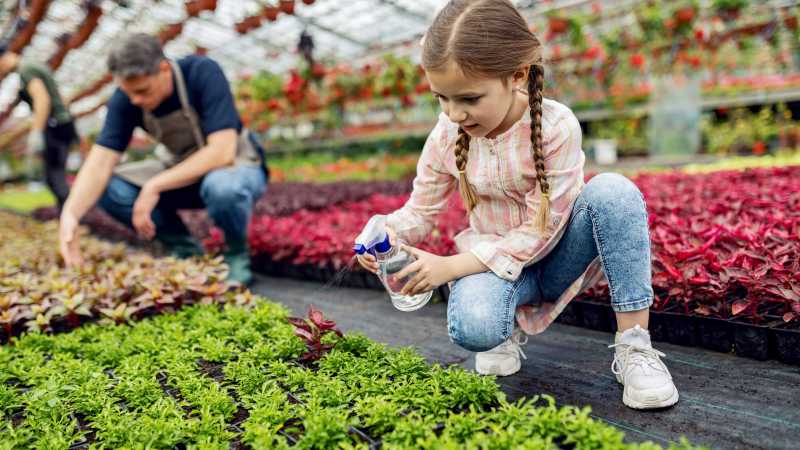
Most kids won’t sit through a lecture about photosynthesis. But give them a seed, a pot and a little greenhouse to look after, and they’ll start asking questions you didn’t expect. A small greenhouse project is one of the best ways to get children learning without them realising they’re doing it.
Find out how a simple greenhouse setup can turn your garden into a hands-on classroom for science, patience and real responsibility below.
A Greenhouse Gives Science a Physical Form
When kids plant seeds inside a greenhouse, they’re setting up a real experiment. They’ll see how warmth and light affect growth, how condensation forms on the panels and why some plants do better in sheltered conditions than others. These are all basic science concepts, but experienced firsthand instead of read from a textbook.
You can make it more structured if you want. Get them to plant the same seeds inside the greenhouse and outside it, then track the differences over a few weeks. They’ll start to notice things like temperature variation, moisture levels and how greenhouse plants can grow two to three times faster than outdoor ones. Even younger children can get involved.
What Happens When a Panel Cracks
Greenhouses aren’t indestructible, and that’s actually a good thing from a teaching perspective. A stray football or a bad storm can crack or shatter a pane, and instead of seeing it as a problem, you can turn it into a practical lesson. Kids will learn that structures need maintenance and that materials have different properties.
If you’re using glass panels, a crack can be dangerous and expensive. That’s why a lot of families switch to plastic glazing instead. Polycarbonate and acrylic panels are lighter, safer and easier for kids to help handle. If you’re using plastic panels and one does crack, you can order replacement greenhouse glazing sheets cut to your frame size, and getting your kids involved in measuring and fitting the new panel will turn a setback into another hands-on lesson.
Patience Doesn’t Come Naturally, but Gardens Help
One of the hardest things to teach any child is patience. When screens deliver everything instantly, waiting a week or two for a tomato seedling to sprout can test anyone’s patience. But that’s exactly why greenhouse gardening works so well.
Kids can’t speed up nature. They have to water, check back tomorrow, and wait. Over time, they start to accept that some things take as long as they take. And when that first green shoot finally appears, the reward is earned in a way that a quick win on a tablet never will be. This carries over into other areas too.
Daily Tasks That Build Real Responsibility
A greenhouse needs regular attention. Plants have to be watered, vents need to be opened on warm days, and pests have to be spotted early. Giving kids ownership of these daily tasks creates a routine they’ll actually want to stick to, because the consequences of forgetting are visible. A wilted plant is hard to ignore.
You can assign tasks based on age:
- Younger kids can water plants, check for bugs, and wipe down panels
- Older kids can manage temperature, repot seedlings, and keep a growth log
- Teenagers can take on planning what to grow each season and budgeting for seeds and supplies
The important thing is giving them genuine ownership of something real. When a child grows a courgette from seed to harvest and then eats it for dinner, they’ve completed a full cycle of effort and reward. That sticks with them.
More Than a Garden Project
You don’t need a huge setup or any special knowledge to make this work. Even a compact greenhouse on a balcony will do the job. The important thing is that children see it as their project, mistakes and all. Overwatering, planting too early or forgetting to open a vent on a hot day will teach them more than any worksheet could.
A small greenhouse project won’t just teach your child about plants. It’ll give them a grounding in science, a better relationship with patience and a sense of responsibility that grows right alongside their seedlings.