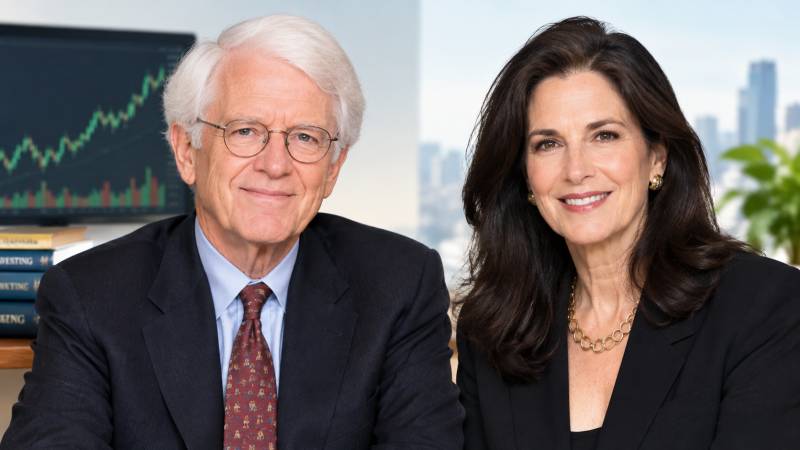
When people discuss influential figures in finance, investing, and business leadership, Peter Lynch and Safra Catz represent two very different but important career paths. Lynch became famous for his work as an investor and mutual fund manager, while Catz built her reputation through corporate finance, technology, operations, and executive leadership at Oracle.
Although they worked in different areas, both professionals developed careers around understanding businesses, making informed decisions, managing financial resources, and adapting to changing markets. Their stories also demonstrate how financial knowledge can influence different parts of the business world.
Peter Lynch became widely known during his time managing Fidelity Magellan Fund from 1977 to 1990. Fidelity records confirm that Lynch managed Magellan during this period, beginning when the fund had approximately $20 million in assets. His investment philosophy emphasized understanding companies, researching businesses carefully, and looking for opportunities that other investors might overlook.
Safra Catz followed another route. She joined Oracle in 1999 and held several senior positions, including executive vice president, president, and chief financial officer. She later became one of Oracle’s CEOs in 2014. In September 2025, Oracle announced that Clay Magouyrk and Mike Sicilia would become CEOs and that Catz would move into the role of Executive Vice Chair of the Board.
Understanding their careers provides a useful way to explore two sides of modern business: investment management and corporate leadership.
Who Is Peter Lynch?
Peter Lynch is an American investor and former mutual fund manager best known for his leadership of the Fidelity Magellan Fund. He managed the fund from 1977 through 1990, a period that established his reputation as one of the best-known mutual fund managers in American financial history.
Lynch became particularly popular among individual investors because he explained investing in straightforward language. Rather than presenting investing as something only professional analysts could understand, he encouraged people to observe businesses around them and investigate companies they already understood.
His approach became associated with the idea of investing in companies that an investor could understand. However, understanding a company was only the beginning. Lynch also emphasized research into earnings, growth prospects, competition, financial conditions, and valuation.
His investment philosophy therefore combined everyday observation with detailed financial research.
Peter Lynch and the Magellan Fund
The Fidelity Magellan Fund became the central part of Lynch’s professional career. Fidelity’s historical records show that Lynch managed Magellan from 1977 to 1990.
During his tenure, the fund became one of the most closely followed mutual funds in the United States. Historical accounts commonly cite an average annual return of approximately 29% during Lynch’s management period.
However, investors should understand that historical performance does not guarantee future results. A fund’s past performance can demonstrate what happened during a particular period, but it cannot guarantee that the same strategy will produce similar results later.
Lynch’s success also came from extensive research. He did not simply buy familiar companies because their products were popular. Instead, he examined their business models and financial conditions before making investment decisions.
Peter Lynch’s Investment Philosophy
One of Lynch’s most recognized ideas involves investing in businesses that investors can understand. Fidelity has continued to reference this principle when discussing stock research and investing education.
The concept sounds simple, but applying it requires discipline.
For example, an investor might notice that a particular retailer is expanding successfully in their local community. That observation can provide an initial research idea. However, the investor should then examine the company’s financial statements, growth rate, debt, competition, profitability, and valuation.
Lynch also looked for different types of companies and categorized businesses according to their characteristics. His broader approach demonstrated that investors should understand what drives a company’s growth instead of relying only on headlines.
Another important part of his philosophy involved patience. Businesses can require time to develop, and stock prices can fluctuate significantly along the way.
The Importance of Research
Lynch’s career illustrates why investment research matters.
A familiar brand does not automatically represent a good investment. A popular product does not guarantee strong shareholder returns. Similarly, a company with impressive growth may already have a stock price that reflects extremely high expectations.
Therefore, investors need to look beyond the surface.
Important research areas can include:
- Revenue growth
- Profit margins
- Earnings trends
- Debt levels
- Competitive advantages
- Industry conditions
- Management quality
- Cash flow
- Company valuation
- Long-term growth opportunities
Lynch’s own comments in a Fidelity educational transcript emphasize understanding a company before investing in it.
That principle remains relevant even though financial markets have changed significantly since the 1970s and 1980s.
Who Is Safra Catz?
Safra Catz is a prominent corporate executive associated with Oracle, one of the world’s major enterprise technology companies.
She joined Oracle in 1999 after working in investment banking at Donaldson, Lufkin & Jenrette. Oracle’s official biography states that she previously held roles including president, chief financial officer, executive vice president, and senior vice president.
Catz became especially influential within Oracle because of her combination of financial knowledge and corporate management experience.
Her responsibilities included financial management and broader business leadership. Over the years, she became one of the most recognizable executives in the technology sector.
In 2014, Oracle appointed Safra Catz and Mark Hurd as CEOs.
She subsequently became a central figure in Oracle’s corporate strategy and development.
Safra Catz and Oracle Leadership
Safra Catz’s career demonstrates a different form of financial leadership from Peter Lynch’s investment management.
Lynch evaluated publicly traded businesses from an investor’s perspective. Catz, by contrast, participated directly in running a large technology corporation.
Oracle operates across enterprise software, cloud infrastructure, databases, applications, and other technology services. As a senior executive, Catz worked on the financial and operational side of these businesses.
Her background in investment banking also gave her experience with major financial transactions and corporate strategy.
Oracle’s official biography identifies her previous responsibilities as president, CFO, executive vice president, and senior vice president.
Consequently, her career provides an example of how financial expertise can lead to senior operational leadership within a technology company.
Safra Catz’s Role in Oracle’s Transformation
Technology companies must continually adapt because customers, competitors, infrastructure, and software models change rapidly.
Oracle has undergone major changes over the years, including its expansion into cloud computing and broader enterprise technology services.
Catz was part of Oracle’s senior leadership during this transformation. Oracle’s 2025 announcement credited her leadership during the company’s development into a large-scale cloud business.
Her career therefore illustrates the connection between finance and technology management.
A technology company needs innovative products, but it also needs financial discipline. Executives must consider investment decisions, operating costs, acquisitions, customers, employees, competition, and long-term growth.
That combination made Catz’s financial background particularly relevant to her executive responsibilities.
Peter Lynch and Safra Catz: Two Different Career Paths
The comparison between Peter Lynch and Safra Catz becomes clearer when we examine their primary responsibilities.
Lynch managed investments.
Catz managed and helped lead a major technology corporation.
Lynch’s main focus involved identifying businesses that could potentially deliver attractive investment results. Catz’s responsibilities involved corporate operations, financial management, strategic decisions, and executive leadership.
These roles require different skills.
An investment manager may spend substantial time analyzing financial statements, industries, company valuations, and market opportunities. A corporate executive may need to coordinate thousands of employees, manage operations, communicate with investors, oversee financial performance, and execute long-term business strategies.
Therefore, their careers should not be viewed as identical examples of success. Instead, they demonstrate how financial expertise can be applied in different professional environments.
Key Differences Between Their Strategies
The major difference between their professional approaches involves the level at which they operated.
Peter Lynch: Investment-Level Decisions
Lynch focused on individual companies and investment opportunities.
His approach encouraged investors to understand businesses and conduct research before purchasing shares. Fidelity educational material continues to highlight the importance of researching companies and diversification when discussing individual-stock investing.
The objective of an investor is generally to evaluate whether a security fits their financial goals, risk tolerance, and expectations.
Safra Catz: Corporate-Level Decisions
Catz operated at the corporate level.
Instead of deciding whether to purchase shares of a particular company for a mutual fund, she participated in decisions affecting Oracle itself.
Those decisions could involve finance, operations, corporate strategy, technology, acquisitions, and organizational priorities.
Her career shows how financial knowledge can support leadership inside a global technology organization.
Their Approach to Understanding Businesses
Interestingly, one common theme connects these two careers: understanding businesses.
Lynch needed to understand the companies in which he invested. Without understanding a company’s products, customers, competition, finances, and growth opportunities, investment decisions could become speculative.
Catz needed to understand Oracle’s business from the inside. Her responsibilities required knowledge of financial performance, technology markets, customers, operations, and corporate strategy.
The difference lies in perspective.
Lynch examined companies as an investor.
Catz helped operate a company as an executive.
That distinction makes their careers particularly interesting to students of business and finance.
Lessons From Peter Lynch’s Career
Several general lessons can be drawn from Lynch’s professional history.
First, research matters. Investors should not purchase securities simply because a company is popular.
Second, investors should understand what they own. Familiarity can provide a starting point, but it should not replace financial analysis.
Third, diversification can help reduce dependence on a single investment. Fidelity’s educational material explains that diversification spreads investments across different companies, industries, countries, and other categories, although it cannot eliminate investment losses.
Fourth, patience matters. Markets can move sharply in the short term, while business performance can take years to develop.
Finally, investors should recognize that successful historical strategies do not automatically work in every market environment.
Lessons From Safra Catz’s Career
Catz’s career offers a different collection of lessons.
One major lesson involves the importance of financial expertise in corporate leadership. A company needs strong products and technology, but it also needs sound financial management.
Another lesson involves adaptability.
Oracle has evolved substantially over the years. The company’s movement toward cloud infrastructure and AI-related computing illustrates how large technology businesses must respond to changing market conditions. Oracle’s 2025 leadership announcement specifically described its cloud infrastructure as supporting large-scale AI training and inference workloads.
Catz’s career also demonstrates how professionals can move between specialized financial roles and broader executive positions.
Current Status of Safra Catz
A current update is important when discussing Safra Catz.
She is not currently Oracle’s CEO. In September 2025, Oracle announced the promotion of Clay Magouyrk and Mike Sicilia to CEO positions and appointed Catz Executive Vice Chair of Oracle’s Board of Directors.
Oracle’s current leadership information also identifies Catz as Executive Vice Chair of the Board.
This change represents a new stage in her long career at Oracle.
She remains an important figure within Oracle’s leadership structure, but articles published today should avoid describing her as the company’s current CEO without noting the 2025 leadership transition.
What Makes Their Careers Interesting Together?
The connection between Peter Lynch and Safra Catz is not that they followed the same career path. Instead, their careers demonstrate two different ways to apply financial and business knowledge.
Lynch became known for evaluating businesses from an investment perspective.
Catz became known for applying financial and strategic expertise inside a major technology company.
Both careers required analytical thinking, attention to financial information, and an understanding of how businesses create value.
However, their responsibilities remained fundamentally different.
Lynch asked questions such as whether a company’s business and valuation justified an investment.
Catz’s executive responsibilities involved questions such as how a large technology company should allocate resources, manage operations, pursue growth, and respond to changing technology markets.
Frequently Asked Questions
Are Peter Lynch and Safra Catz related?
There is no well-established public evidence indicating that Peter Lynch and Safra Catz are related. Their connection comes primarily from their prominence in finance and business rather than from a documented family relationship.
What was Peter Lynch famous for?
Peter Lynch became famous for managing Fidelity Magellan Fund from 1977 to 1990. Fidelity’s historical records confirm his management period.
What is Peter Lynch’s investment philosophy?
Lynch is widely associated with understanding businesses before investing in them. His approach emphasized research, company fundamentals, and identifying potential opportunities through careful observation and analysis.
Was Safra Catz the CEO of Oracle?
Yes. Oracle appointed Safra Catz as CEO in 2014 alongside Mark Hurd. However, she left the CEO role in September 2025 when Oracle appointed Clay Magouyrk and Mike Sicilia as CEOs. Catz became Executive Vice Chair of the Board.
What does Safra Catz do now?
Oracle currently identifies Safra Catz as Executive Vice Chair of its Board of Directors.
What is the biggest difference between Lynch and Catz?
Peter Lynch primarily built his reputation through investment management, while Safra Catz built hers through corporate finance and executive leadership at Oracle.
Conclusion
The story of Peter Lynch and Safra Catz brings together two distinct perspectives on finance and business. Peter Lynch became famous for managing Fidelity Magellan Fund and developing an accessible approach to understanding individual companies. His career demonstrated the importance of research, patience, diversification, and business knowledge.
Safra Catz followed a corporate leadership path. Her long career at Oracle included positions such as CFO, president, CEO, and, since September 2025, Executive Vice Chair of the Board.
Although their careers developed in different environments, both demonstrate the importance of financial understanding and strategic decision-making.
For investors, Lynch’s career offers a historical example of professional investment management. For business professionals, Catz’s career provides an example of how financial expertise can support leadership at a major technology company.
Ultimately, their stories show that success in finance does not follow only one path. Investment management and corporate leadership require different responsibilities, but both depend on research, discipline, adaptability, and a strong understanding of how businesses operate.
For more info visit Keloland